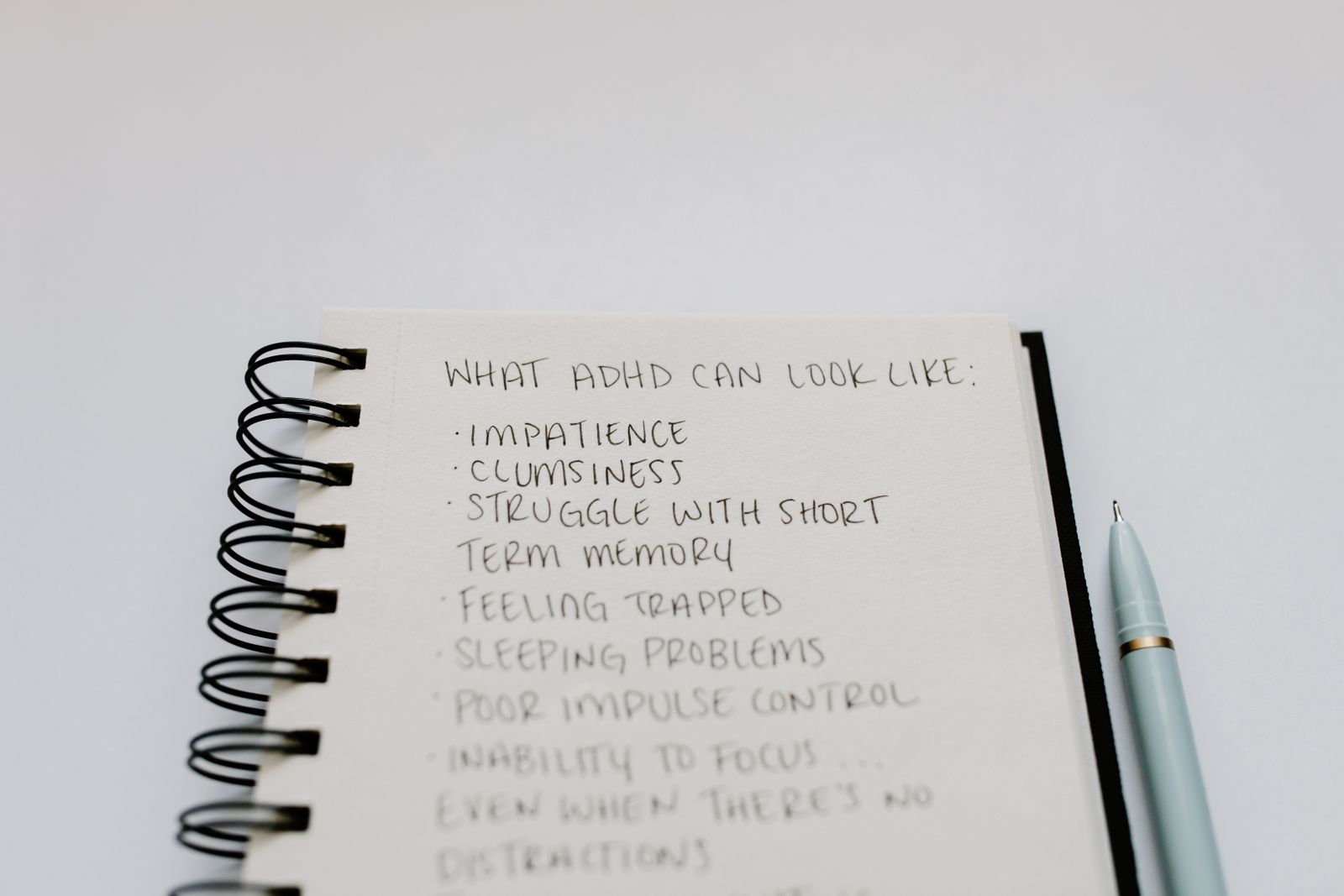
ADHD symptoms in children fall into two groups: inattention, and hyperactivity with impulsivity. A child can show mostly one group, or both. What changes most with age is not whether the symptoms are present but how they show themselves.
Inattention: the quieter cluster

- Loses focus quickly on anything that is not immediately interesting.
- Starts tasks enthusiastically and rarely finishes them.
- Appears not to listen, even when looking straight at you.
- Loses coats, water bottles, homework, PE kit — repeatedly.
- Makes careless mistakes in work they clearly understand.
- Avoids or delays anything that requires sustained mental effort.
- Is easily pulled off-track by noise, movement or their own thoughts.
Hyperactivity and impulsivity: the visible cluster
- Fidgets constantly, or leaves their seat when expected to stay.
- Runs, climbs or moves in situations where it is not appropriate.
- Talks a great deal, often at volume.
- Blurts out answers or finishes other people's sentences.
- Finds waiting genuinely painful — in queues, in games, in conversation.
- Interrupts and intrudes without meaning to be rude.
How ADHD symptoms change with age
The underlying difficulties stay similar; the way they appear shifts as demands increase.
- 1
Ages 4–6
Very high activity, difficulty sitting for stories or meals, frequent accidents, big emotional swings, difficulty taking turns in play.
- 2
Ages 7–10
Homework becomes a flashpoint. Careless errors, unfinished work, forgotten equipment, difficulty following multi-step instructions, friendship friction after impulsive moments.
- 3
Ages 11–14
Visible restlessness often drops; disorganisation rises. Missed deadlines, lost planners, difficulty starting tasks, being told they are 'lazy' or 'not trying'.
- 4
Ages 15–17
Coursework and exams expose difficulties with planning and self-monitoring. Risk-taking, sleep problems and low self-esteem often become the dominant concerns.
The three tests clinicians apply
Symptoms alone are not enough. Clinicians look for a pattern that began in childhood, has lasted at least six months, appears in more than one setting, and causes real difficulty in daily life. That last point is the one families most often underestimate — a child who is struggling silently still counts.
Signs it is worth a professional opinion
- Teachers raise the same concerns you have at home
- Homework regularly ends in tears or conflict
- Your child says they are 'stupid' or 'always in trouble'
- Friendships are difficult to keep, not just to make
- The pattern has been present for six months or more
- Strategies that work for siblings do not work here
Commonly mistaken for ADHD
Several other things produce very similar behaviour, which is exactly why assessment involves ruling things in and out: poor sleep, hearing or vision difficulties, anxiety, undiagnosed dyslexia, trauma or major upheaval at home, and autism. A good assessment considers all of them.
Frequently asked questions
- How many symptoms mean ADHD?
- The DSM-5 criteria require six or more symptoms in a cluster for children up to 16, and five or more from age 17, present for at least six months, in more than one setting, and causing impairment. Counting symptoms is only one part of a clinical judgement.
- Can ADHD symptoms appear suddenly?
- No. ADHD is a developmental condition, so signs are present from early childhood even if they are only noticed when school demands increase. A sudden change in behaviour usually points to something else and is worth discussing with your GP.
- Do symptoms have to appear at school?
- They need to be present in more than one setting, but school is often where they are most obvious. Some children mask successfully at school and fall apart at home, which clinicians take seriously.
Free · 8 minutes · No sign-up
Screen your child in eight minutes
Answer 22 questions based on recognised diagnostic criteria and get a written profile you can take to your GP or a private clinician.
Start the ADHD screening