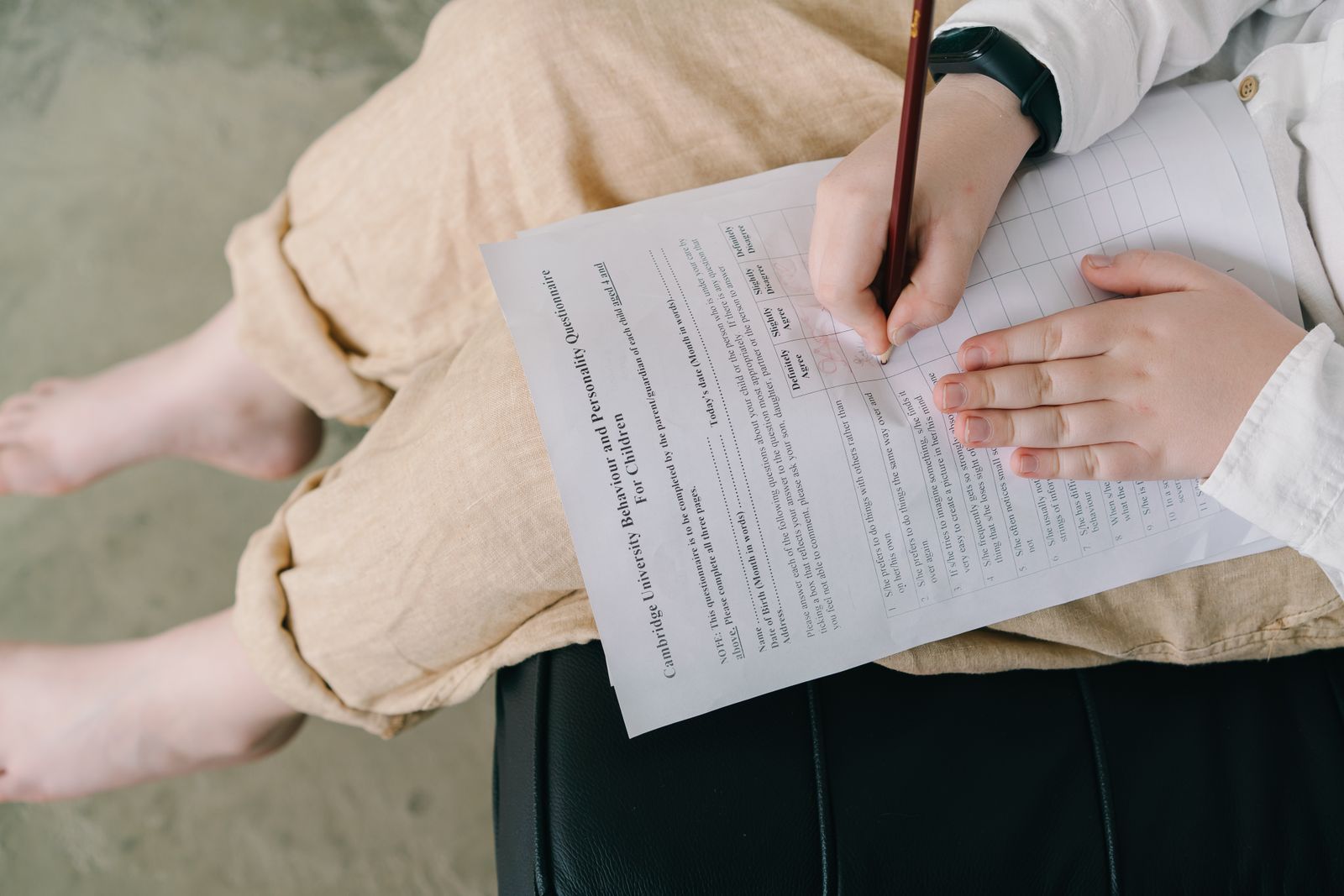
The single most useful thing you can do before a GP appointment is turn impressions into evidence. Ten minutes is not long, and a written record does most of the work for you.
Attention checklist

Inattention: tick what happens most days
- Loses focus on tasks within a few minutes
- Does not finish what they start
- Appears not to hear instructions
- Loses belongings repeatedly
- Makes careless errors in work they understand
- Avoids tasks needing sustained effort
- Easily distracted by noise or movement
- Forgets routine daily steps
Hyperactivity and impulsivity: tick what happens most days
- Fidgets or cannot stay seated
- Moves or climbs when it is not appropriate
- Talks a great deal, at volume
- Blurts out answers
- Cannot wait for a turn
- Interrupts conversations and games
- Acts before thinking about consequences
- Seems driven by a motor
How to log examples
For each concern, write one dated line: what happened, where, who else was present, and what the consequence was. Five specific entries carry more weight than a paragraph of general description.
The impact section people forget
- How long homework really takes, on a normal night.
- How many times a week there is a conflict about routines.
- What your child says about themselves.
- Friendships kept and lost over the past year.
- Anything the family no longer does because it is too difficult.
Preparing for the appointment
- 1Bring a one-page summary: three main concerns, duration, and impact.
- 2Bring your screening profile and any teacher comments.
- 3Say the words 'I would like a referral for an ADHD assessment'.
- 4Ask which service, how long the wait is, and what happens next.
- 5Ask for the referral confirmation in writing.
Frequently asked questions
- How long should I keep a record before seeing a GP?
- Two to four weeks of dated examples is usually plenty, provided the difficulties themselves have been present for at least six months.
- Should my child know I am doing this?
- For most children, an age-appropriate explanation that you are trying to understand what makes things hard helps them feel supported rather than assessed.
- Will the GP want school input?
- Almost always. A brief note or email from the class teacher or SENCO strengthens a referral considerably.
Free · 8 minutes · No sign-up
Screen your child in eight minutes
Answer 22 questions based on recognised diagnostic criteria and get a written profile you can take to your GP or a private clinician.
Start the ADHD screening